AI has changed the economics of producing work.
A team can now generate code, analysis, documentation, test cases, summaries, and ideas faster than it could before. That is useful. It is also easy to confuse faster production with better delivery.
The harder question is becoming more important: What is worth producing in the first place?
That is why Lean-Agile practices are more relevant now, not less.
AI makes production cheaper. It does not make judgment easier.
AI can help create an answer quickly. It cannot, by itself, determine whether the answer addresses the right problem, improves an important outcome, or belongs in the system at all.
Organizations still need to decide what matters, what to do next, what to stop doing, and how to learn whether a change worked. Those are not primarily generation problems. They are problems of value, flow, prioritization, feedback, and decision-making.
AI increases the speed at which teams can produce possibilities. Lean-Agile provides the discipline to select among them.
More output can create more waste
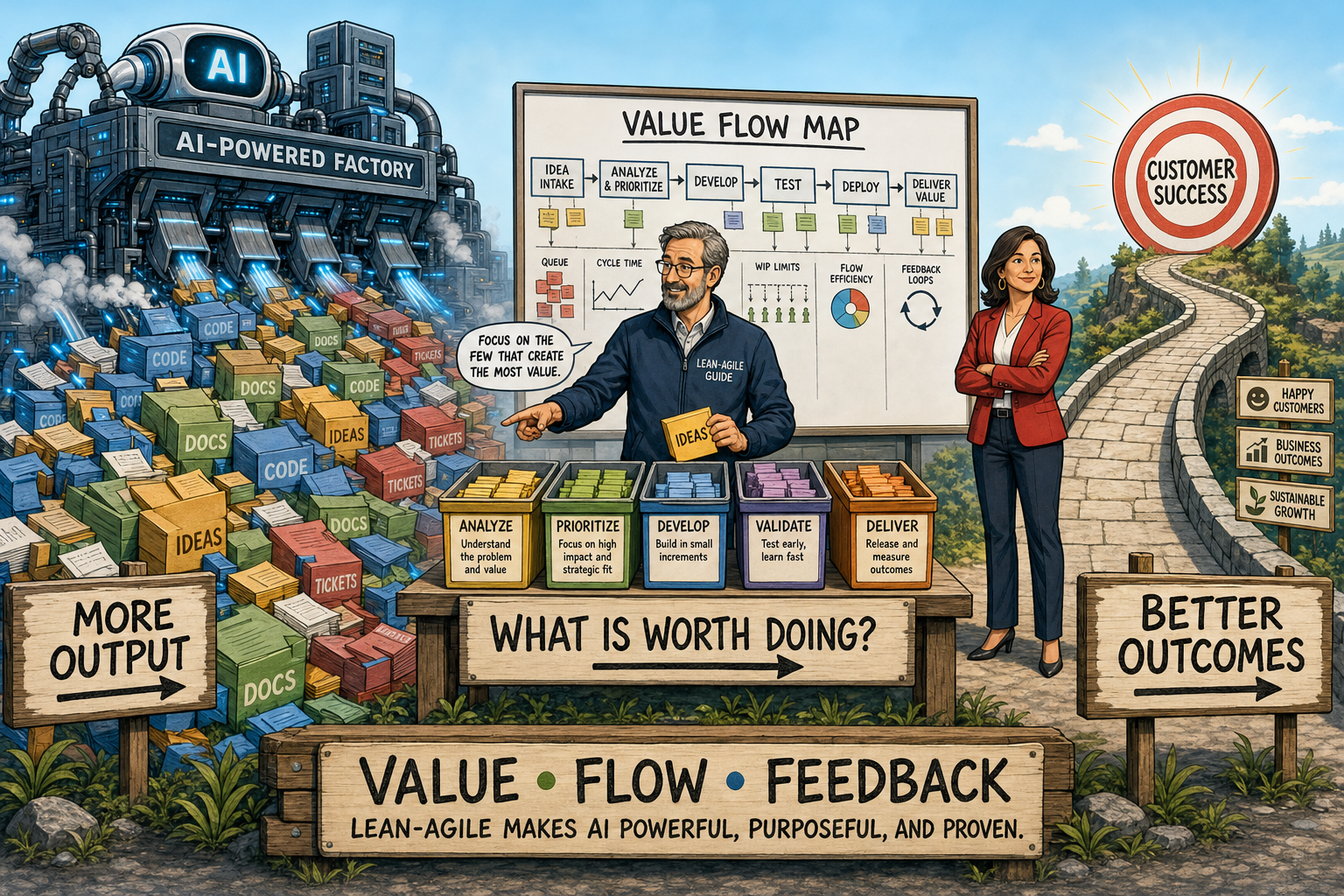
When production accelerates, work-in-progress can grow just as quickly. Teams may create more tickets, documents, designs, reports, and code than the organization can review, use, or learn from.
The result is not necessarily progress. It may be a larger queue, more competing priorities, more handoffs, and more decisions waiting for attention.
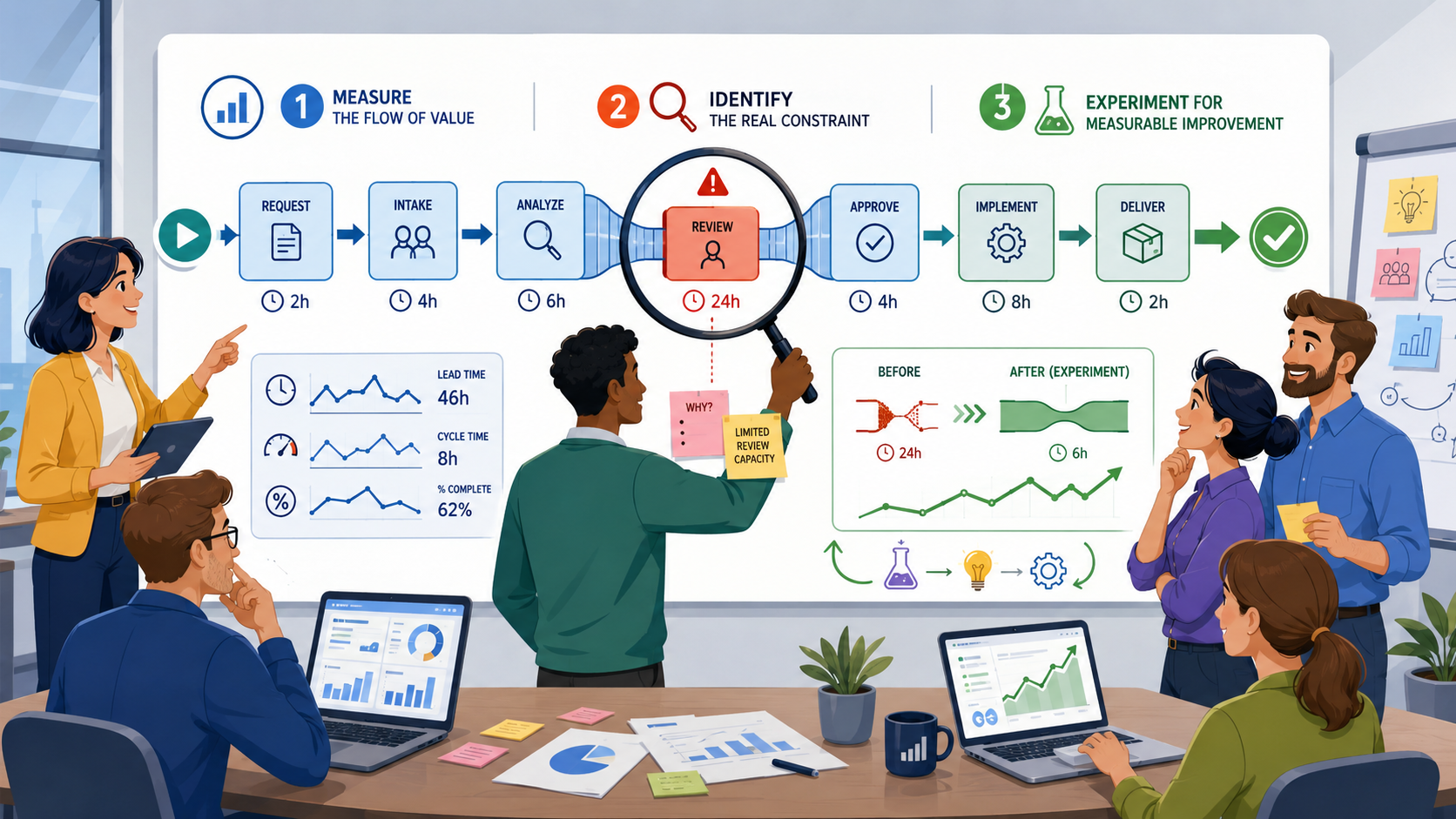
Lean-Agile practices help make that visible. A value-stream view asks where work is waiting and why. Clear prioritization helps teams distinguish important work from merely available work. Small batches make it easier to test an idea before investing heavily in it.
The point is not to reduce output for its own sake. The point is to keep production connected to an outcome.
The most useful AI applications improve learning
AI is often introduced as a way to write or build faster. Those uses can be valuable, but they are only part of the opportunity.
AI can also help teams:
- clarify competing options
- identify assumptions and risks
- summarize feedback across many sources
- find patterns in operational data
- prepare experiments and test cases
- expose gaps in a process or decision
- shorten the time between an action and useful feedback
These uses support the learning loop rather than simply adding more work products to it.
The useful question is not only, “What can AI generate?” It is also, “What can AI help us learn, decide, or improve?”
Feedback loops matter more when the system moves faster
A faster system needs faster feedback. Otherwise, it can move confidently in the wrong direction.
Short delivery cycles, frequent reviews, validation with users, retrospectives, and outcome measures are not administrative overhead around AI adoption. They are how an organization learns whether its use of AI is creating value.
This also changes what teams should measure. Counting generated artifacts or completed tasks may tell part of the story, but it does not answer the most important questions:
- Did the customer or stakeholder outcome improve?
- Did the work move through the system more easily?
- Did quality or risk change?
- Did the team learn something that changed the next decision?
AI can accelerate activity. Feedback tells us whether the activity was useful.
Lean-Agile is not a brake on AI
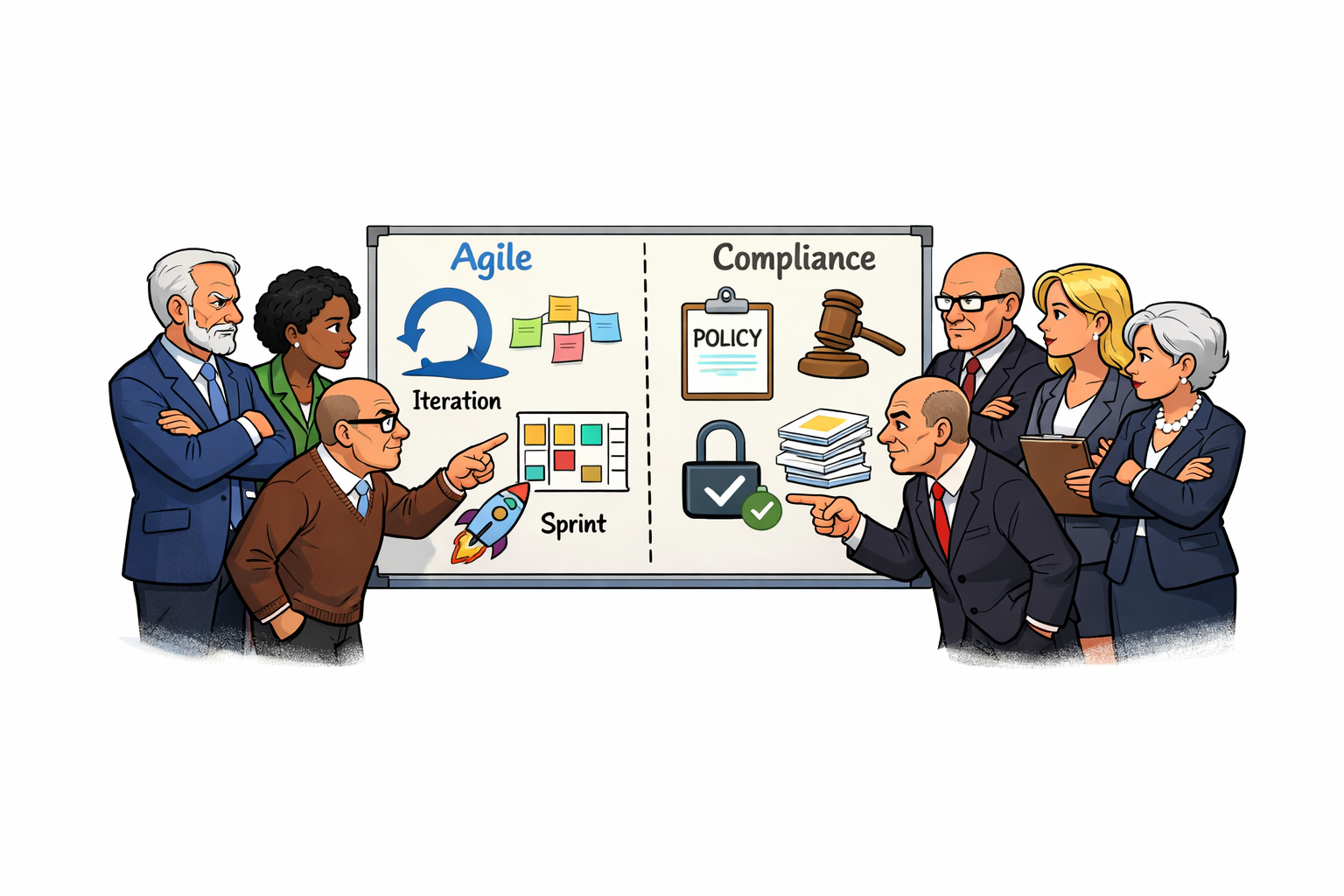
There is a temptation to frame Lean-Agile discipline as a constraint on AI adoption. That misses the point.
Lean-Agile is not an argument against producing more. It is a way to connect effort to value, expose delay and waste, and create the feedback needed to improve a system.
That discipline becomes more important when technology makes it easy to create work at unprecedented speed. Without it, AI adoption can become an artifact factory: impressive output, growing inventory, and little evidence of better outcomes.
With it, teams can use AI more deliberately. They can start with a meaningful problem, test a focused intervention, observe what changes, and make the next decision based on evidence.
AI has not made Lean-Agile obsolete. It has made the underlying questions harder to avoid:
What outcome are we trying to improve?
Where is work waiting?
What is the smallest useful change we can test?
How will we know whether it helped?
The organizations that benefit most from AI will not necessarily be the ones that generate the most output. They will be the ones that learn fastest, reduce waste, and keep production connected to outcomes.
Use AI to improve learning and delivery, not just to create more work.
← All insights