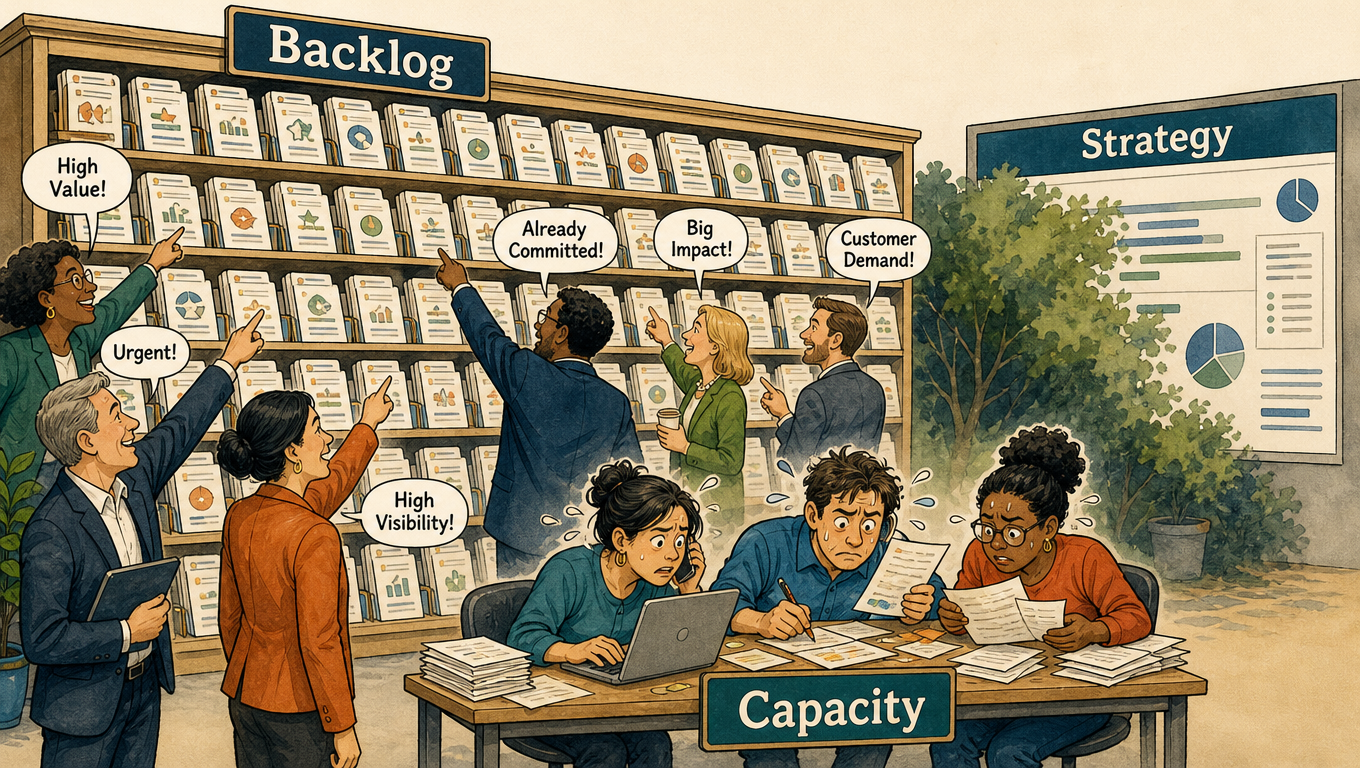
A large backlog can create the appearance of strategic control.
Everything is ranked. Every request has a place. Leaders can point to hundreds of items and say, “We know what we need to do next.”
But a ranked list is not the same as a strategy. And a long list of possible work is not the same as organizational capacity.
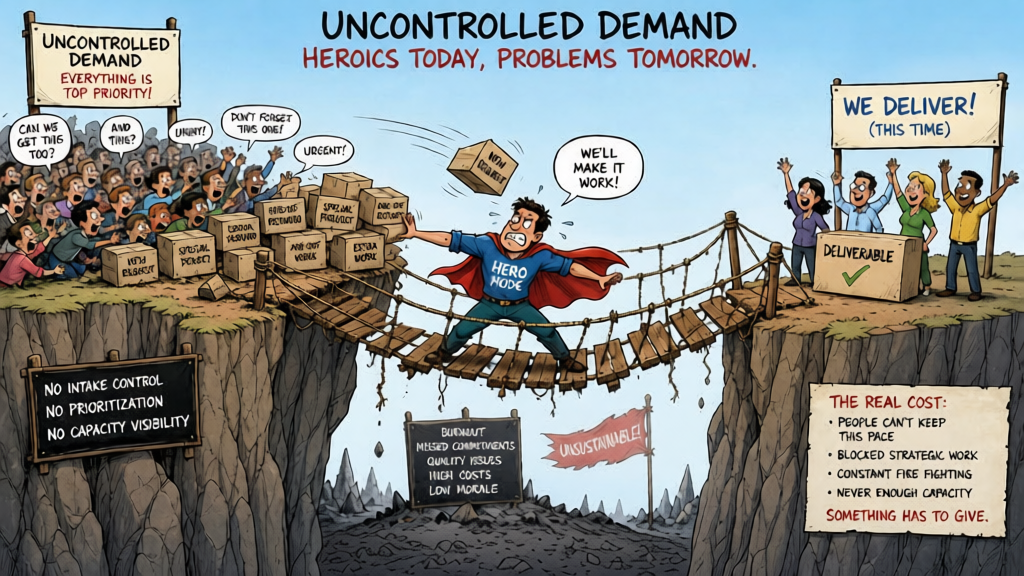
That is the capacity fantasy: treating potential demand as though it were active demand.
The problem is not having too many ideas
Organizations need a place to preserve ideas, requests, opportunities, and emerging needs. Removing everything that cannot be delivered immediately would be both impractical and shortsighted.
The problem begins when the same backlog is expected to serve several purposes at once:
- Capture new ideas
- Preserve future options
- Represent strategic priorities
- Describe work ready for delivery
- Support forecasting
- Show commitments to stakeholders
Those purposes require different levels of information and different operating policies.
An idea in an early discovery state should not carry the same implication as work that has been selected for active delivery. When both appear in one undifferentiated backlog, the organization loses the ability to see what it is actually carrying.
The result is predictable. Teams refine work that may never be selected. Leaders forecast against demand that has not been committed. Stakeholders interpret ranking as a promise. And the organization confuses an inventory of possibilities with a plan for value delivery.
A ranked backlog can still be strategically incoherent
Prioritization is useful, but ordering items does not make them add up to a meaningful outcome.
A list can be perfectly ranked and still contain:
- Requests serving conflicting outcomes
- Work with no clear recipient of value
- Duplicated solutions to the same problem
- Items disconnected from current strategy
- More active demand than the value stream can absorb
- Work that competes for the same scarce capability
Strategy requires choices about what will receive attention, resources, and leadership focus—not merely a sequence of requests.
The question is not only, “What is first?”
It is also:
“What value stream are we trying to improve, and what should not be active right now?”
Kanban provides a practical mitigation
Kanban offers a useful way to preserve possibilities without confusing them with commitments.
A simple workflow might include:
- Funnel — ideas and requests are captured with minimal information.
- Discovery — a limited number of options are examined.
- Ready — work is sufficiently understood to be pulled.
- In progress — active value delivery is underway.
- Done — the intended outcome has been delivered or validated.
The funnel can remain open. It does not need to become a tightly managed delivery backlog.
The important controls come later:
- Limit work in discovery and refinement.
- Define explicit entry criteria for “Ready.”
- Make the pull or commitment point visible.
- Forecast from active delivery states, not from the entire funnel.
- Review aging options without pretending every item deserves ongoing attention.
Kanban does not solve strategy by itself. It does, however, make the organization’s choices—and its lack of choices—more visible.
Align resources to value delivery
The deeper issue is not simply backlog hygiene. It is how the organization aligns people, funding, and management attention.
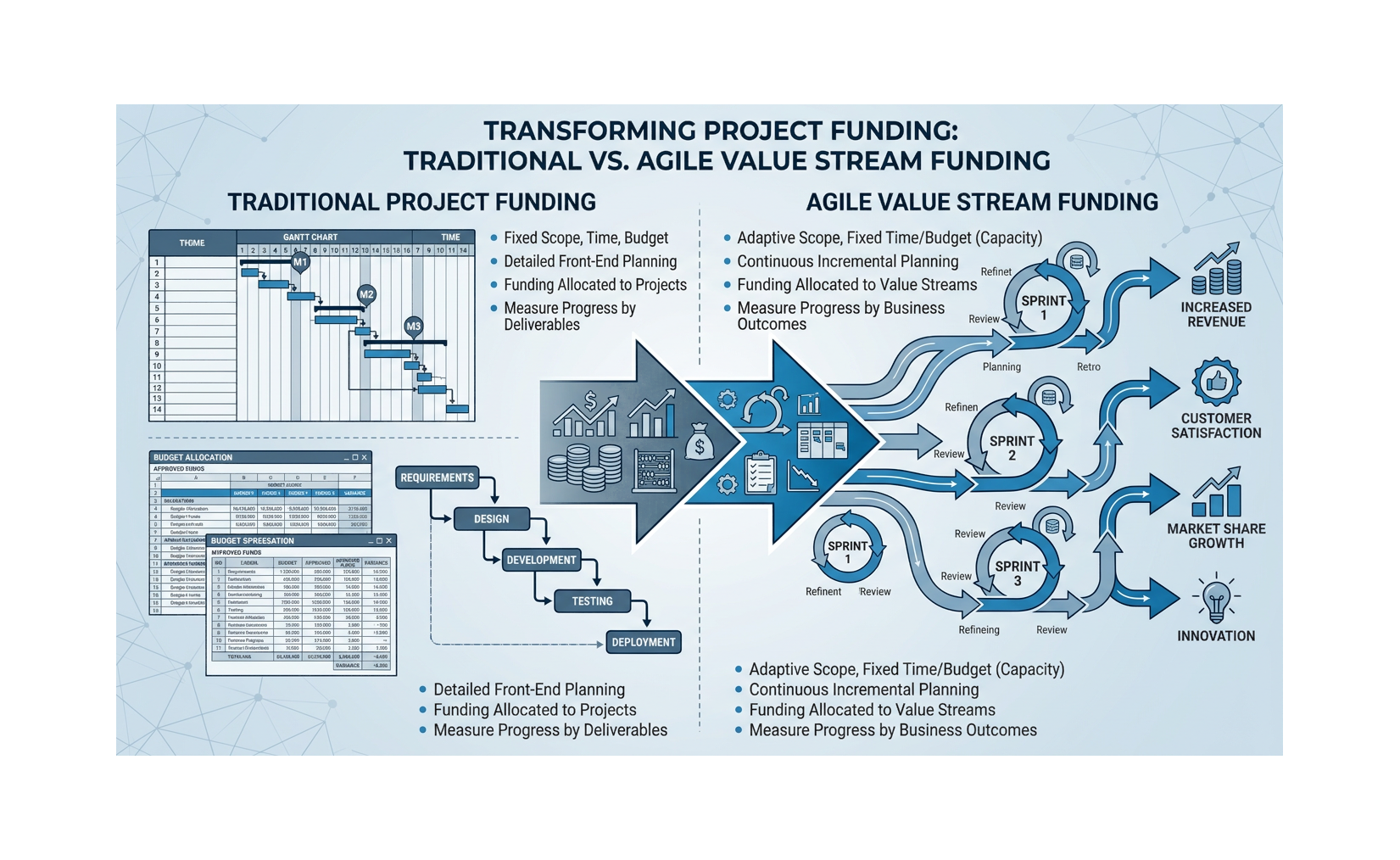
Resources should follow value streams and enduring value-delivery capabilities rather than being organized primarily around temporary project containers. This means replacing project accounting with value-stream funding: giving leaders visibility into the outcomes a value stream is responsible for, the capacity available to it, and the evidence that should guide future allocation.
That model changes the leadership conversation.
Instead of asking:
“Which projects are on the list?”
Leaders ask:
- Which value streams are we trying to improve?
- What outcomes matter now?
- Where is flow constrained?
- What capacity is available?
- What evidence supports increasing, reducing, or redirecting resources?
- Which options should remain in the funnel without consuming active attention?
This preserves flexibility without creating the illusion that every possibility is already part of the operating plan.
The practical takeaway
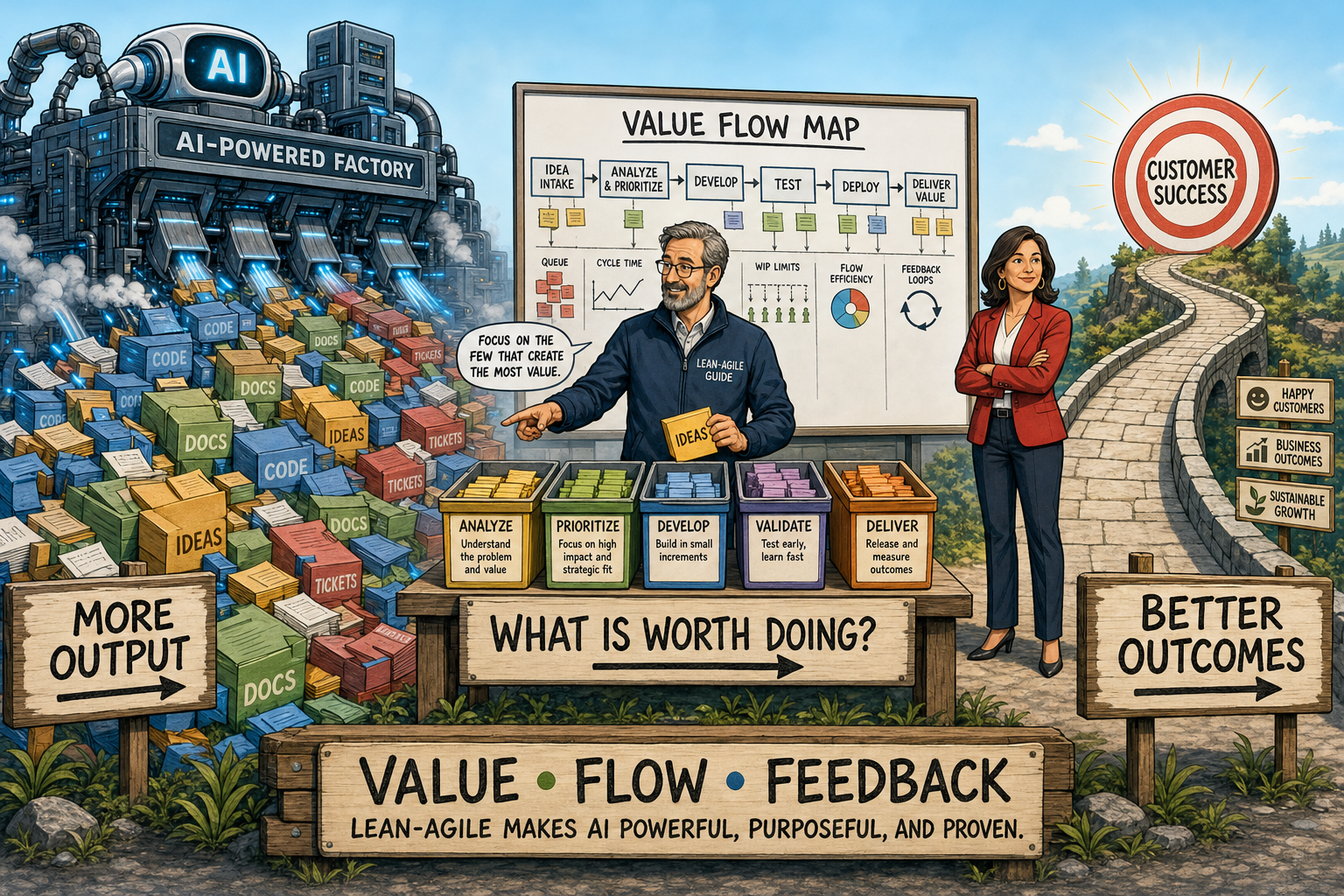
The answer is not to shrink the backlog for its own sake. The answer is to stop asking one list to represent every kind of work.
Preserve ideas. Limit discovery. Make readiness explicit. Make commitments visible. Measure flow where value is actually being delivered.
A backlog becomes dangerous when it makes uncommitted ideas look like active demand. Kanban helps separate those states. Value-stream funding ensures that resources remain aligned to ongoing value delivery rather than temporary project structures.
The goal is not fewer ideas. It is a more honest view of what the organization is choosing to advance, what it is merely preserving, and where resources are actually creating value.
← All insights